

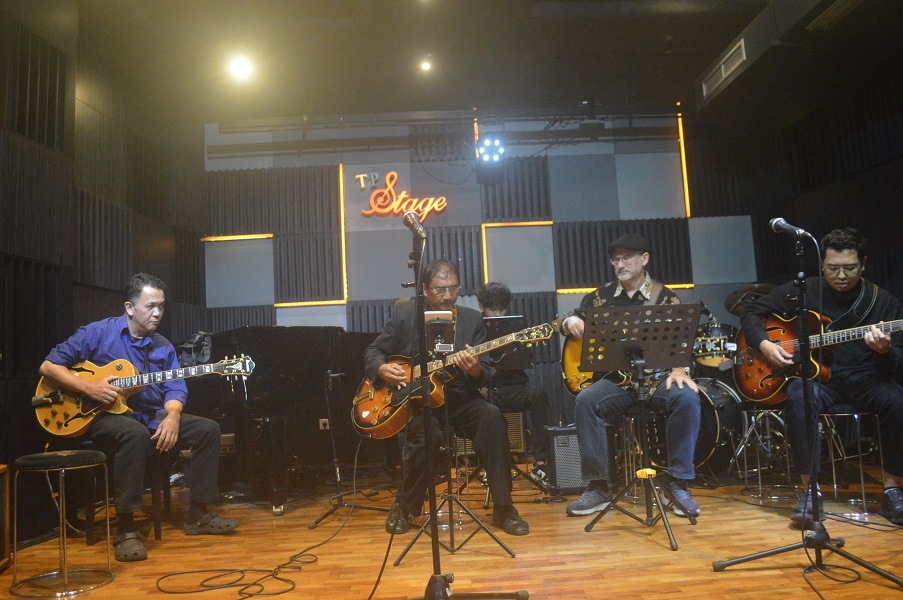
KOTA BANDUNG, INDONESIA – The TP Stage at The Papandayan Hotel has established a reputation as a distinguished sanctuary for jazz performance in West Java. On the evening of February 13, 2025, the venue hosted an event of significant artistic merit, entitled “Four Paths of Improvisation.” This performance transcended the typical parameters of a jam session, presenting instead a sophisticated masterclass in harmonic dialogue. The atmosphere was characterized by a profound sense of anticipation as the audience convened to witness a convergence of four distinct musical methodologies..
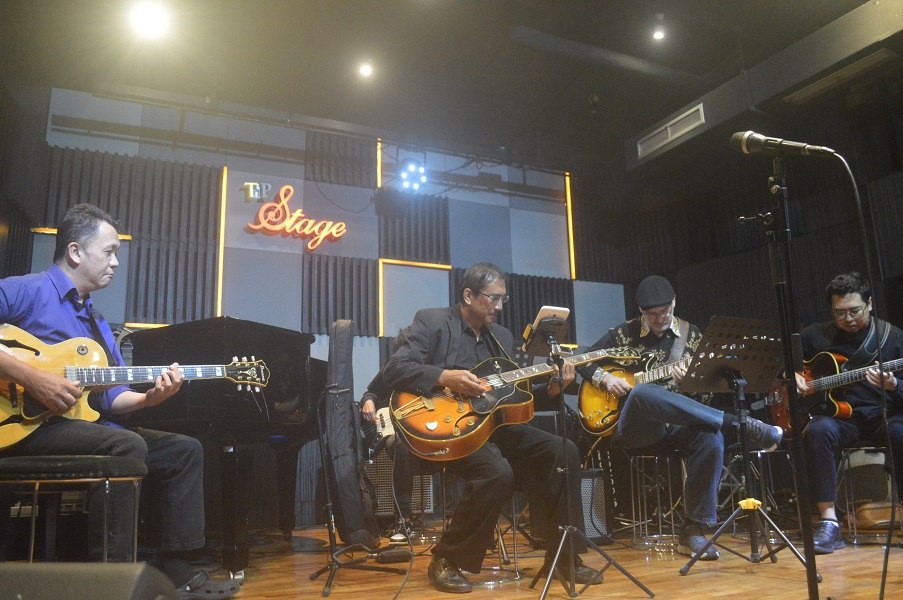
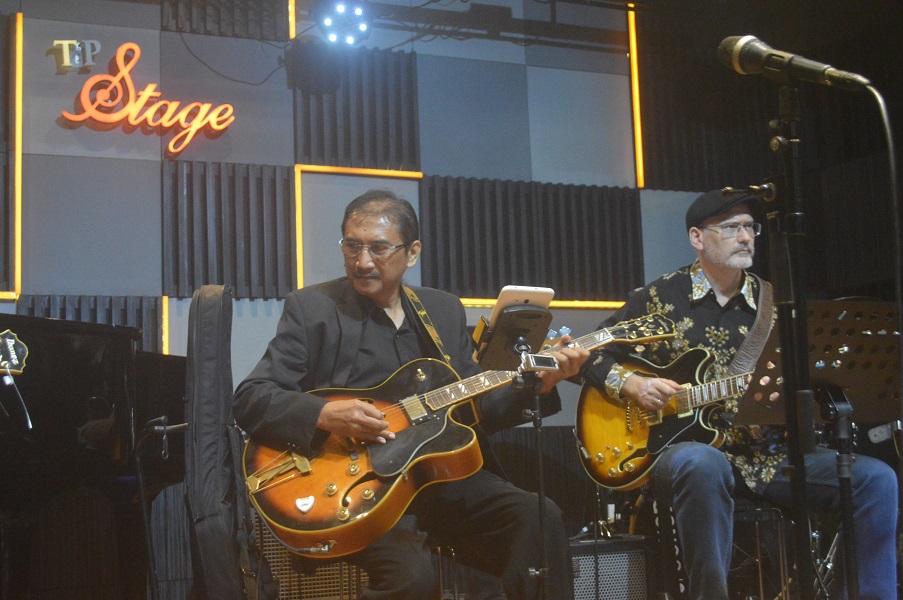
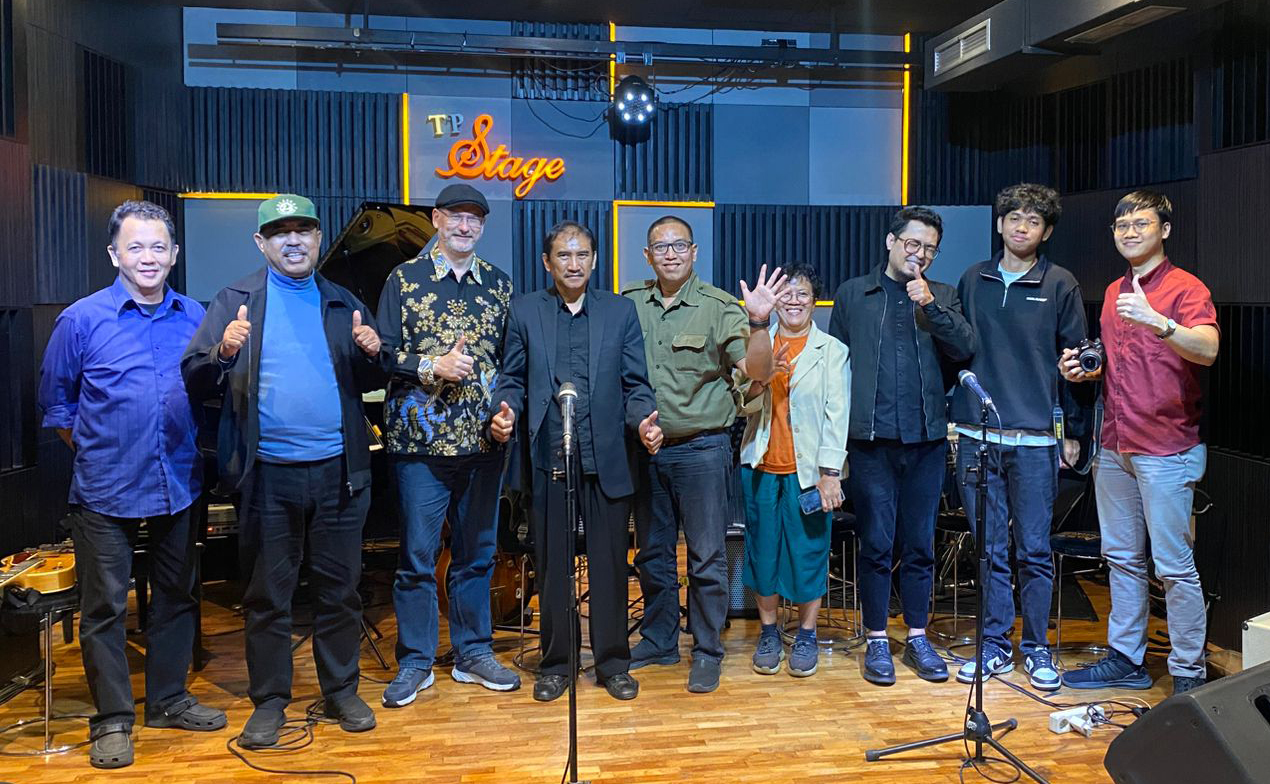
The ensemble featured a distinguished lineup of guitarists, each representing a specific stylistic pillar within the jazz tradition: Kanggep A. Kusuma, Arif Ginanjar, Matt Ashworth, and Benyamin Mattarang . This guitar-centric formation was anchored by the bassist Ezra Manuhutu, resulting in a quintet configuration that facilitated a high degree of improvisational interplay.
A Convergence of Musical Methodologies
The repertoire was curated with rigorous attention to detail, comprising advanced jazz standards celebrated for their harmonic complexity and demanding rhythmic structures. It was within this challenging framework that the musicians exhibited their respective “paths,” navigating the intricate compositions with technical precision and stylistic individuality.
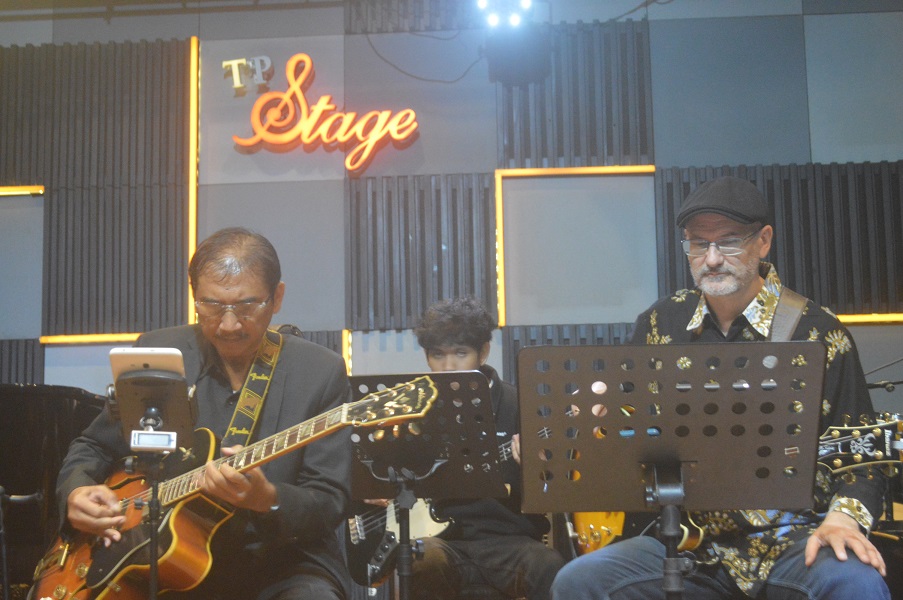
Kanggep A. Kusuma, S. Pd., M. Kom. distinguished not only as a performer but also as a respected academic, introduced a dimension of intellectual rigor to the performance. His approach was defined by precision, patience, and harmonic intelligence. Navigating dense chord progressions with composure, Kanggep’s phrasing appeared both intricate and deliberate. He withstood superfluous ornamentation in favor of rhythmic space, allowing the compositions to breathe. His capacity to resolve complex dissonances and his sophisticated use of voice-leading evoked the stylistic nuances of Jim Hall. Kanggep demonstrated that in jazz, intellectual analysis and emotional expression are not mutually exclusive but rather synergistic.
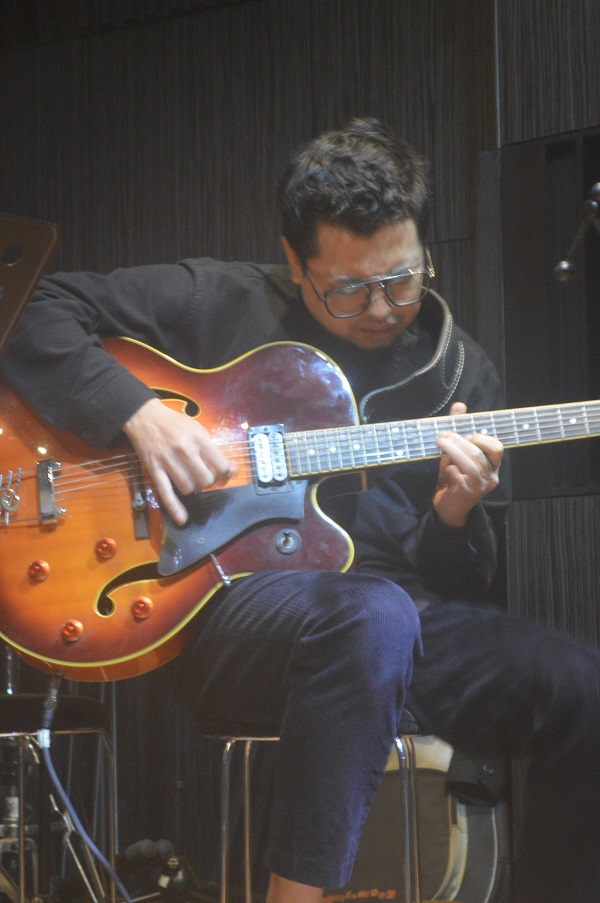
Conversely, Arif Ginanjar provided a compelling stylistic counterpoint. Frequently compared to Peter Bernstein due to his warm, organic tone and adherence to the hard-bop aesthetic, Arif demonstrated a significant evolution in his artistic trajectory. While his foundational swing remained impeccable; rooted deeply in traditional jazz vernacular, he unveiled a modern sensibility previously underexplored in his standard repertoire. Arif expanded the harmonic boundaries of the standards, incorporating contemporary concepts and angular melodic lines that revitalized classic structures. His improvisations navigated tension and release with unpredictability, suggesting a keen awareness of the modern evolution of jazz guitar.
Versatility and Harmonic Support
A notable highlight of the evening was the performance of Matt Ashworth. Although primarily recognized in the Bandung jazz community for his proficiency on the saxophone, Ashworth demonstrated an exceptional command of the guitar. Mastering a second instrument to such a degree is a rare accomplishment. Channeling the virtuosity associated with Joe Pass, his execution on the fretboard was marked by remarkable dexterity. His background as a wind instrumentalist likely informed his “breath-like” phrasing, which he combined with a polyphonic capability inherent to the guitar. His fluency in the Bebop language was evident in his articulation and rapid melodic lines that aligned seamlessly with the harmonic movement, illustrating that profound musicianship transcends the specific instrument employed.
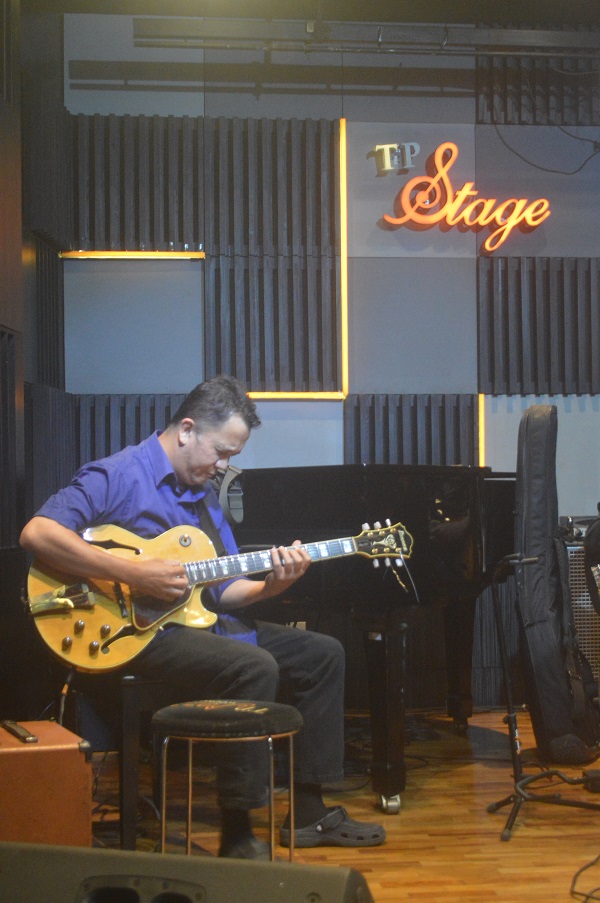
Completing the guitar quartet was Benyamin, whose contribution provided essential textural cohesion to the ensemble. In a context featuring three other dominant soloists, the role of harmonic support requires significant discipline. Benyamin executed this role with distinction, maintaining his presence among the virtuosos while facilitating the collective conversation. His comping was rhythmic and precise, establishing a harmonic foundation that enabled the other soloists to explore more abstract ideas, thereby ensuring the ensemble’s sound remained coherent.
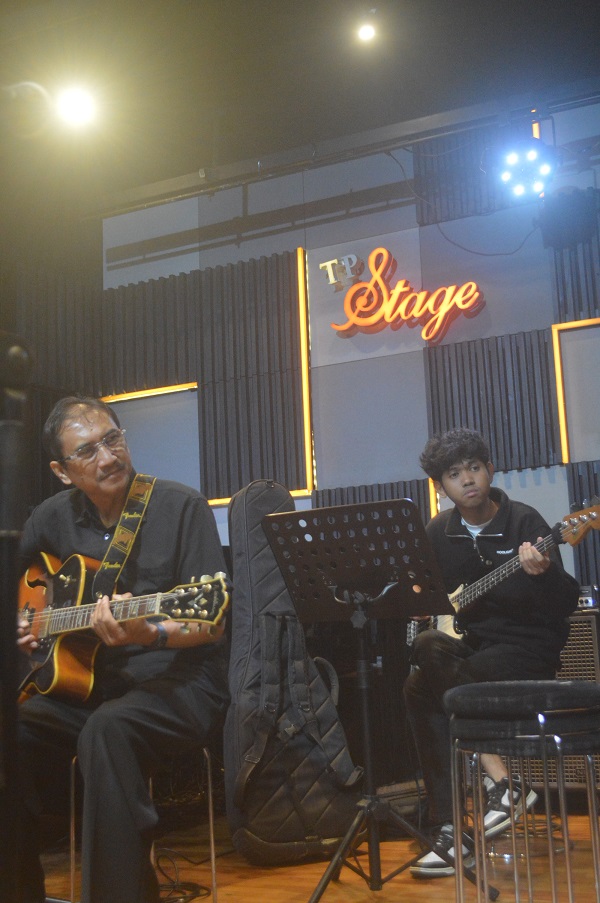
The Rhythm Section: Dynamic Interplay
The ensemble’s cohesion was significantly bolstered by Ezra Manuhutu on bass. Far from merely fulfilling a supportive function, Ezra directed the ensemble with a dynamic approach that commanded attention. His influence was perceptible in every measure. His improvisational style was melodic and fluid, utilizing the full register of the instrument in a manner reminiscent of John Patitucci. He transitioned effortlessly between maintaining the groove with solid time-keeping and executing high-register solos characterized by lyrical clarity. Ezra drove the band’s energy, reacting instantaneously to the guitarists’ motifs and encouraging greater improvisational risk-taking.
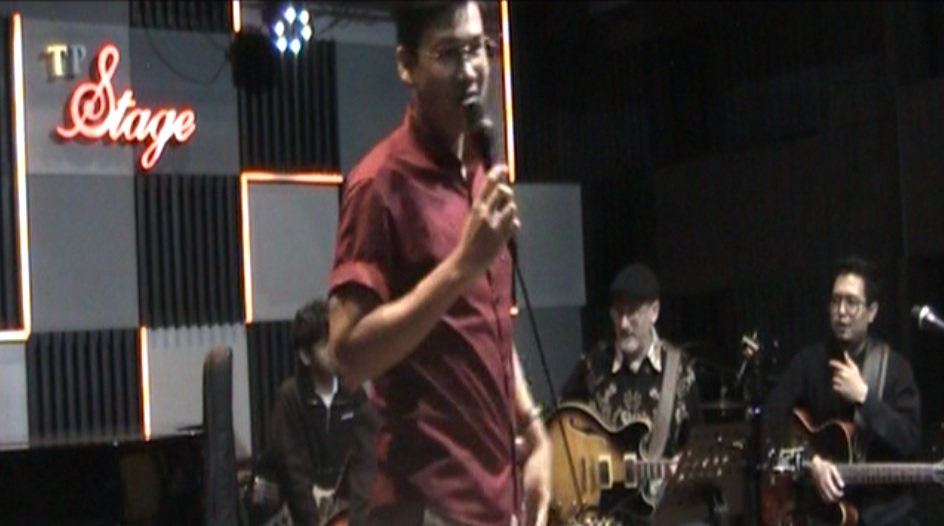
The event was facilitated by Alman Naufal, M. Pd., who effectively managed dual responsibilities. As the Master of Ceremonies, he provided context and continuity throughout the evening. However, his contribution was most profound during the second session, when he assumed the role of drummer. Alman’s jazz-drumming performance extended beyond mere time-keeping; it constituted an active dialogue. His soloing style was distinctive, offering rhythmic counterpoints that challenged the guitarists and heightened the performance’s intensity. He employed a melodic sensibility on the drums, engaging in “trading fours” and “trading eights” with the guitarists. His seamless transition from host to rhythmic anchor added a layer of personal engagement that resonated with the audience.
The Architect of the Summit: Visionary Leadership
The genesis of this unique ensemble and the overarching success of the event are fundamentally attributed to the visionary leadership of Mr. Venche Manuhutu, who served as both the Producer and Promoter for the group and the TP Jazz series. Distinguished as the Owner and Headmaster of the Venche Music School (VMS), Mr. Manuhutu is a figure of profound respect and influence within the Indonesian jazz archipelago. It was his curatorial foresight that catalyzed the formation of this group; he envisioned the complex texture of a four-guitar lineup and facilitated the convergence of these specific masters. The consensus suggests that without his enduring presence and dedication to the art form, neither this masterful performance nor the sustained excellence of the TP Jazz stage would be realized. His influence provided the essential platform for this high-caliber artistic expression, cementing his legacy as a pivotal guardian of jazz in the region.
Conclusion
“Four Paths of Improvisation” served as a testament to the high caliber of musicianship present in Bandung. The event illustrated how the jazz genre allows for vastly different interpretations by distinct masters while maintaining a cohesive aesthetic. From Kanggep’s introspective, Hall-esque approach, Arif’s Bernstein-style, Benjamin’s Wes Montgomery-aesthetic, to Ashworth’s Pass-inspired virtuosity, the performance at TP Stage was a collaboration of significant merit. It was an evening where the historical and contemporary trajectories of jazz guitar intersected, leaving a lasting impression on the local and national jazz community.

 iroquistore