

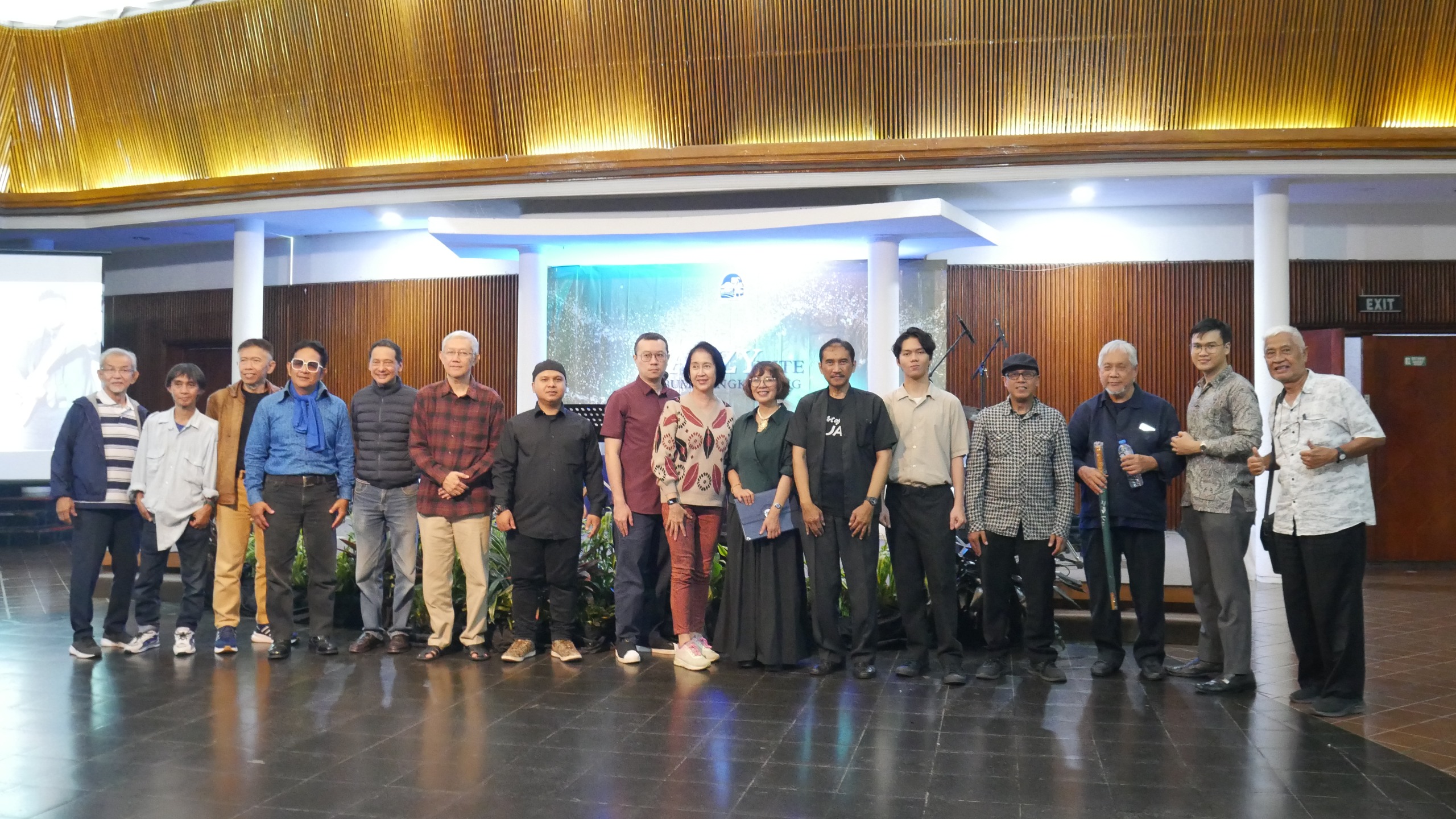
The evolution of jazz music is intrinsically linked to the cultivated environments. While the genre’s origins are deeply rooted in the intuitive, improvised traditions; its modern iteration frequently intersects with the structured realms of higher education and advanced academic research. On the evening of April 23, 2026, the cultural landscape of Bandung, West Java, bore witness to a paradigm-shifting manifestation of this intersection. The Bumi Sangkuriang Jazzy Night served as the exclusive venue for an extraordinary ensemble composed of five distinct intellectual and musical forces: Dr. Imelda A. Rosalin, S.T., M.T. (Vocal/Piano); Alman Naufal, M.Pd. (Drum); Kanggep A. Kusuma, S.Pd., M.Kom. (Guitar); Aries Ardiansyah, M.Sn. (Bass); and Ir. Imam Pras (Piano).
The Intellectualization of the Performers
This specific gathering was entirely unprecedented in its concentration of academic credentials upon a single stage. It was not merely a concert, but an epistemological exhibition; a rare demonstration of how advanced scholarly disciplines, spanning architecture, engineering, linguistics, computer science, and fine arts, fundamentally restructure the cognitive approach to musical improvisation. The performance, widely lauded as breathtakingly mesmerizing, demands a profound, multidisciplinary investigation into the unique duality of these individuals. As elite jazz musicians and formidable academics, they represent a new archetype in the performing arts: the multi-talented improviser.
Actually, jazz improvisation requires the instantaneous processing of complex harmonic structures, the real-time negotiation of interplayed rhythms, and an acute sociological awareness of ensemble dynamics. When these demands are met by minds trained in rigorous empirical research and advanced pedagogical methodologies, the resulting music assumes a profound structural integrity. The improvisational language moves beyond mere intuitive expression and enters the realm of applied theory, where architectural spatial awareness, computational logic, and linguistic syntax become the hidden frameworks of the sonic architecture. This report provides an exhaustive, granular analysis of this phenomenon, dissecting the socio-cultural ecosystem of Bandung that nurtures such endeavours, and meticulously examining the academic trajectory of each musician to illuminate the causal relationships between their scholarly pursuits and their distinct musical endeavours.
The Cultural and Pedagogical Ecosystem of Bandung Jazz
To fully comprehend the magnitude of the April 2026 Bumi Sangkuriang performance, it is imperative to dissect the unique geographic and socio-cultural ecosystem that birthed it. Bandung has long operated as the intellectual and creative crucible of Indonesia. With its dense concentration of premier academic institutions, for example Institut Teknologi Bandung (ITB), or Universitas Pendidikan Indonesia (UPI); the city fosters a demographic of highly educated professionals who are simultaneously deeply entrenched in the arts. This geographic proximity between the laboratory, the lecture hall, and the stage has birthed a distinctive local jazz scene characterized by its analytical depth and structural sophistication. The infrastructure supporting this dualistic lifestyle is remarkably robust. It consists of specialized music schools that bridge the gap between advanced improvisational theory, and dedicated jazz venues that prioritize acoustic integrity over commercial viability, and progressive media outlets that treat the genre with scholarly references.
In fact, the establishment of regular events, born from a recognized need for a dedicated “jazz playground” in Bandung, ensures that musicians have consistent opportunities to refine their craft and engage in complex musical dialogues. For instance, the Bumi Sangkuriang, an iconic heritage building in Bandung, is particularly significant; its architecture and historical weight command a level of respect that influences the repertoire and demeanor of the performers. The April 23, 2026 event was a continuation of this tradition, utilizing the venue’s sophisticated acoustic properties to deliver a highly articulated musical presentation and it also provides a broader national ecosystem that validates and sustains the local Bandung scene. This constant, public engagement with the intellectual aspects of music ensures that the Bandung jazz community remains analytical, self-aware, and continuously evolving. The musicians are required to be as articulate in spoken dialogue as they are on their instruments, further cementing the bond between academia and artistry.
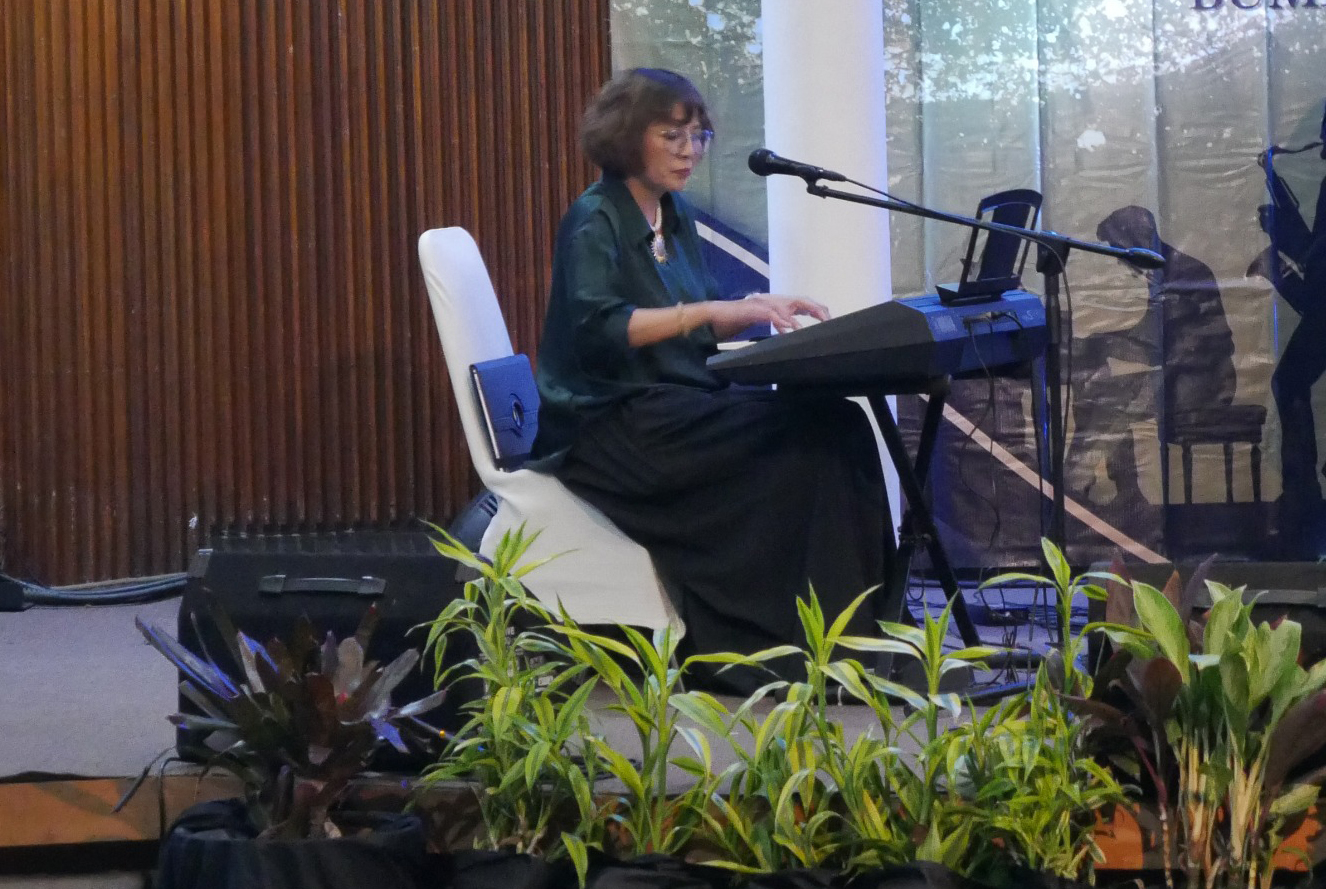
Spatial Intelligence and Harmonic Structures: Dr. Imelda A. Rosalin, S.T., M.T.
Dr. Imelda A. Rosalin, S.T., M.T., occupies a singular, highly elevated position in the Indonesian cultural landscape. She is an undisputed icon of the Bandung jazz scene and a highly accomplished consultant, and academic. Her ability to seamlessly navigate and dominate these two demanding spheres provides a fascinating study in the cognitive transferability of spatial and structural intelligence, which represent a deep, systematic understanding of spatial relationships, structural integrity, tension, and release. These exact concepts are remarkably analogous to the mechanics of musical composition and advanced jazz improvisation. This building of perception must possess both aesthetic appeal and structural soundness; an imbalance leads to either functional failure or visual dissonance. Dr. Rosalin applies this exact paradigm to her music. When approaching the piano or utilizing her vocal instrument, her phrasing is highly architectonic. She does not merely play a succession of notes dictated by chord-scale theory; she constructs an entertaining and soothing package of performance.
Each musical phrase she generates acts as a structural element, carefully placed to support the harmonic weight of the composition. The analytical frameworks developed during her academic training allow her to deconstruct a jazz standard, instantly identifying its foundational harmonic pillars (the strong cadences) and its decorative melodic facades. This allows her to improvise with an extraordinarily rare sense of spatial awareness. Her solos are noted for their logical progression, building tension with the precision before resolving perfectly into a stable harmonic foundation and clear vocal articulation. This methodology ensures that even during moments of avant-garde or highly chromatic exploration, her music retains a sense of deep, internal logic that prevents structural collapse.
Moreover, she placed a massive emphasis on the concept of negative space; the areas left intentionally empty to define the solid structures around them. In jazz, this translates to the masterful use of silence and space within a solo. Dr. Rosalin’s improvisational syntax is heavily reliant on this architectural principle. By strategically deploying silence, she frames her melodic statements, giving them greater impact and allowing the listener’s ear to process the harmonic information. This is the hallmark of a mature improviser, one who understands that what is omitted is often as crucial as what is played.
Systems Engineering and the Pedagogy of Post-bop: Ir. Imam Pras
The presence of Ir. Imam Pras in the Bumi Sangkuriang ensemble brought a vital dimension of rigorous engineering logic and seasoned pedagogical mastery to the performance. Known as a master piano teacher and a central, foundational pillar of the Bandung jazz education system, his background as an engineer (indicated by the “Ir.” or Insinyur title, the traditional Indonesian professional engineering credential) fundamentally dictates his approach to the keyboard, his composition process, and his highly successful transmission of musical knowledge.
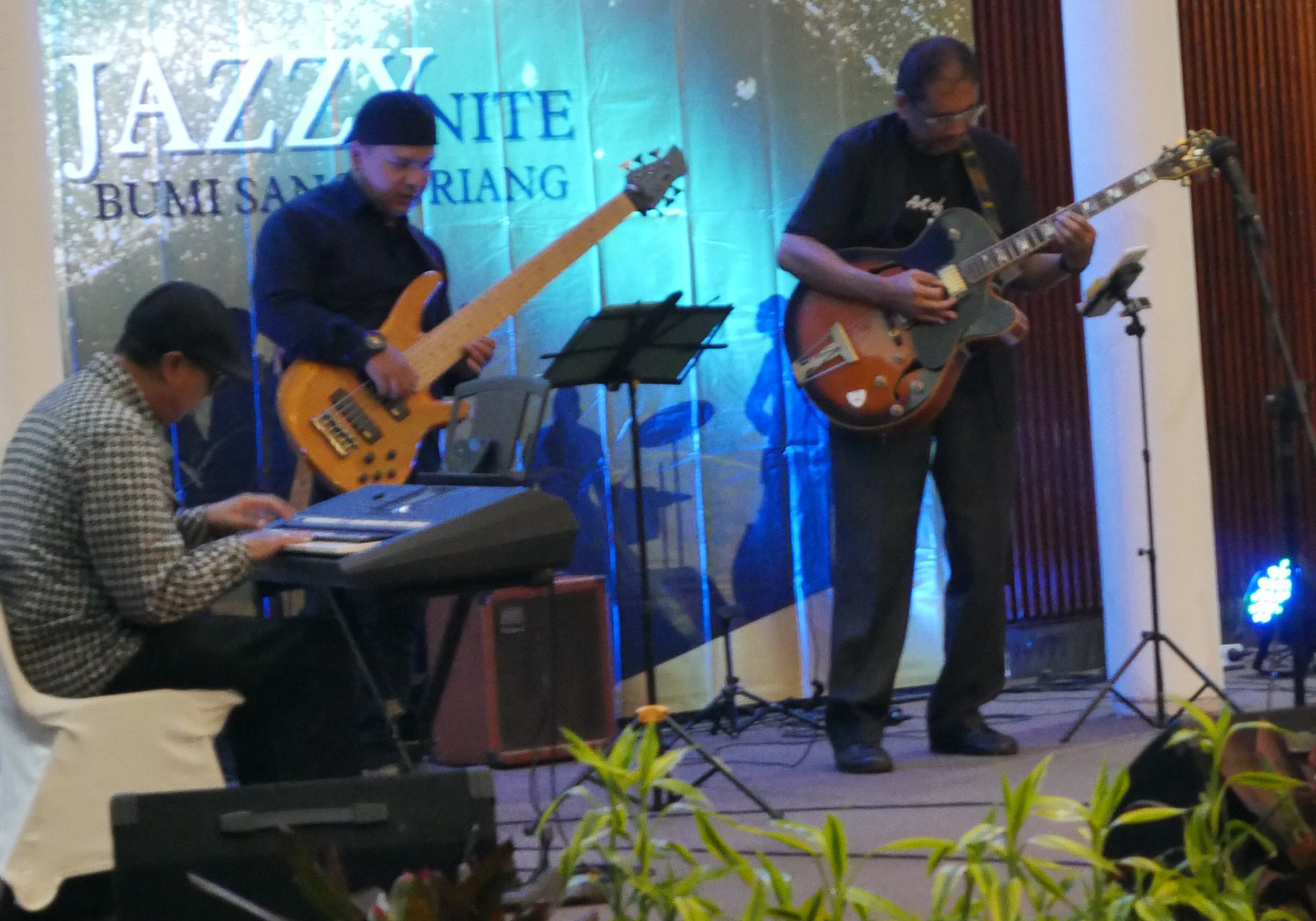
Engineering, particularly branches dealing with chemical processes, structural mechanics, or fluid dynamics, involves the intensive study of complex systems, thermodynamic equilibrium, and the precise manipulation of variables to achieve an optimized, desired outcome. For a jazz pianist, the keyboard is not merely an instrument, but the physical interface of a highly complex, interconnected harmonic system.
Ir. Imam Pras is deeply rooted in the bebop and modern jazz eras, specifically the stylistic hallmarks of the late 1940s through the 1950s. This specific period in jazz history represents an exponential leap in harmonic complexity, marked by rapid chord substitutions, altered dominants, and intricate voice-leading. Pras approaches this era of music not with pure emotive intuition, but with the analytical precision of an engineer decoding a complex schematic diagram. Ir. Imam Pras is also well known as Indonesian “Herbie Hancock” due to his masterful, virtuosic way of jazz playing and arranging.
He is able to implement a timed tension and release in his musical presentation. Well, if the tension is happened to be released too early, the solo loses its kinetic energy; if it is held too long, the structural integrity of the form collapses. His playing is characterized by an absolute mastery over these variables, resulting in improvisations that are mathematically sound, logical, yet incredibly fluid. He engineers his solos to ensure that the musical energy is always optimized and never squandered, resulting in performances that are both intellectually stimulating and viscerally compelling.
Syntactic Rhythm and Linguistic Morphology: Alman Naufal, M.Pd.
The rhythmic propulsion of the Bumi Sangkuriang performance was dictated by Alman Naufal, M.Pd. A musician whose academic credentials in education and applied linguistics provide a profoundly unique, structural lens through which to view the art of the drum kit. Heavily affiliated with Universitas Pendidikan Indonesia (UPI) in language development research, Naufal’s scholarly work digs deep into the structural mechanics of language, specifically focusing on French institutional linguistics, the morphological behavior of near-synonyms, discourse analysis and the development of digital learning modules designed to elevate meta-syntactic grammar consciousness. The translation of these advanced linguistic concepts to the percussive realm creates a highly sophisticated, communicative approach to rhythm and meter.
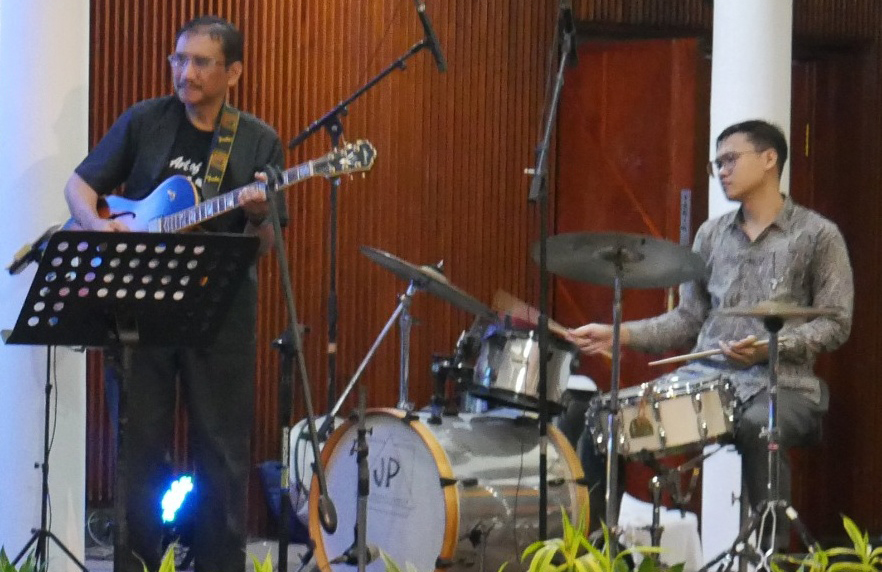
To the uninitiated listener, the act of drumming is often perceived as an entirely visceral, physical, or purely athletic pursuit. However, through the specialized lens of linguistics, drumming reveals itself as a highly structured language complete with its own complex syntax, morphology, and semantics. Alman Naufal’s deep academic immersion in the study of grammar fundamentally dictates his timekeeping and his improvisational vocabulary on the drum kit.
In spoken language, syntax is the set of rules, principles, and processes that govern the structure of sentences. It dictates how words are arranged to create coherent, well-formed statements. In the realm of drumming, percussive syntax dictates the precise arrangement of rhythmic subdivisions, dynamic accents, and subtle ghost notes to create a well-formed, compelling groove. Naufal’s specific academic research into the functional specialization of near-synonyms provides a direct parallel to his physical playing.
In linguistics, near-synonyms are words that share a core meaning but possess subtle, functional differences in tone, formality, or implication. Naufal applies this exact concept to his drum kit. A snare drum hit played dead-center versus a rimshot played slightly off-center are percussive near-synonyms; they serve the same fundamental timekeeping function, but they carry completely different emotional implications. Because of his acute awareness of these subtle morphological differences, Naufal is able to apply microscopic variations to his comping (accompaniment) and his ride cymbal patterns. He chooses his percussive vocabulary with the exactitude of a master linguist, altering the emotional resonance of a musical phrase without ever disrupting its fundamental syntactic structure. And then, his specific focus on “meta-syntactic consciousness” (the awareness of the structural rules of language, rather than just the rote memorization of vocabulary) is the defining characteristic of his musical style.
A drummer with meta-syntactic awareness does not just play a beat; they understand the overarching architectural rules of the groove and how it interacts with the harmony and melody. Subsequently, his research into digital learning modules implies a deep, academic understanding of how complex information is absorbed and processed by the human brain. This pedagogical expertise makes him an incredibly empathetic accompanist. He does not merely dictate the time rigidly; he actively communicates it, constantly reading the soloists and adjusting his rhythmic output to match their cognitive and musical needs in real-time. Just as a linguist learns to operate fluently within entirely different syntactic structures (bilingualism), Naufal operates within multiple metric and rhythmic structures simultaneously. He superimposes complex polyrhythms with the effortless fluency of a native speaker seamlessly switching between languages, providing a highly stable yet incredibly elastic foundation for the ensemble.
Algorithmic Processing, Cybernetic, and Multitonal Improvisation: Kanggep A. Kusuma, S.Pd., M.Kom.
Adding to the profound intellectual density of the Bumi Sangkuriang ensemble was Kanggep A. Kusuma, S.Pd., M.Kom. Possessing dual degrees in education (S.Pd., Sarjana Pendidikan) and computer science/information systems (M.Kom., Magister Komputer), Kusuma introduces the highly rigorous principles of computational logic, algorithmic efficiency, and digital heuristics into the fundamentally analog realm of jazz improvisation. As an active, respected participant in the Bandung jazz community and a featured intellectual speaker on the intersection of education, jazz, and professional methodologies; his approach represents a flawless synthesis of traditional musical artistry with the analytical frameworks of the digital age.
Jazz improvisation, stripped of its romanticized facade, is essentially an exercise in extreme, high-speed data processing. A musician must instantaneously analyze massive amounts of incoming auditory data (the pianist’s chord voicings, the bassist’s passing tones, the drummer’s shifting rhythmic subdivisions) and generate a real-time output (the melodic solo) that strictly adheres to the established parameters of scale theory and stylistic convention, all while maintaining aesthetic beauty. Kanggep A. Kusuma’s advanced academic background in computer science (M.Kom.) equips him with a unique vocabulary and a highly structured conceptual framework for managing this immense cognitive load.
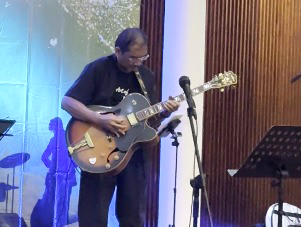
In the discipline of computer science, an algorithm is a set of precise, unambiguous instructions designed to perform a specific task, process data, or solve a particular mathematical problem. Algorithms rely heavily on logic gates, conditional statements (the classic “if/then” scenarios), and recursive loops. Kusuma’s improvisational style can be effectively analyzed through this exact computational lens. When navigating a complex, fast-moving set of chord changes, he does not rely solely on muscle memory. Instead, he applies heuristic routing; a problem-solving approach in computer science that employs a practical method to produce solutions that may not be absolutely perfect, but are optimal given a limited timeframe.
He instantly identifies the most efficient, aesthetically pleasing melodic paths through the dense harmony. His solos possess a distinct, undeniable logical clarity; musical patterns are established as variables, processed through various harmonic iterations (akin to running data through a recursive loop), and ultimately resolved with mathematical precision. This computational approach ensures that his solos are never meandering; they are always directed, purposeful, and highly efficient.
In fact, the field of computer science is deeply intertwined with the concept of cybernetics; the transdisciplinary study of regulatory systems, communication, and control in both machines and living organisms, particularly concerning the behavior of feedback loops. In a live jazz ensemble, the feedback loop is constant, instantaneous, and multidirectional. The soloist plays a phrase; the rhythm section analyzes it and reacts, altering their accompaniment; the soloist hears this alteration, processes the new data, and adjusts their subsequent phrase accordingly.
Kusuma’s academic training allows him to optimize this cybernetic feedback loop on the bandstand. He is hyper-aware of the informational input being broadcast by his fellow musicians. He processes this data rapidly, adjusting his algorithmic approach in real-time. This ensures that his playing never exists in an isolated vacuum. It is deeply contextually relevant and highly responsive to the environment. His ability to clearly articulate these complex concepts reveals a musician who is deeply conscious of the underlying mechanics of his art form. He successfully utilizes the advanced cognitive tools of the digital era to enhance, rather than sterilize, a distinctly analog musical tradition.
Aesthetic Anchoring and Contrapuntal Musicology: Aries Ardiansyah, M.Sn.
The critical harmonic and rhythmic bridge of the ensemble (the foundation upon which all other intellectual explorations relied) was provided by the bassist, Aries Ardiansyah, M.Sn. Holding a Magister Seni (Master of Arts) degree, Ardiansyah brings a rigorous, highly refined academic understanding of fine arts, aesthetics, and musicology to the physical, demanding act of playing the bass. His role in the April 23, 2026 performance was absolutely paramount. He served as the indispensable aesthetic anchor that safely tethered the intellectual flights of his peers to a grounded, visceral, and deeply swinging groove.
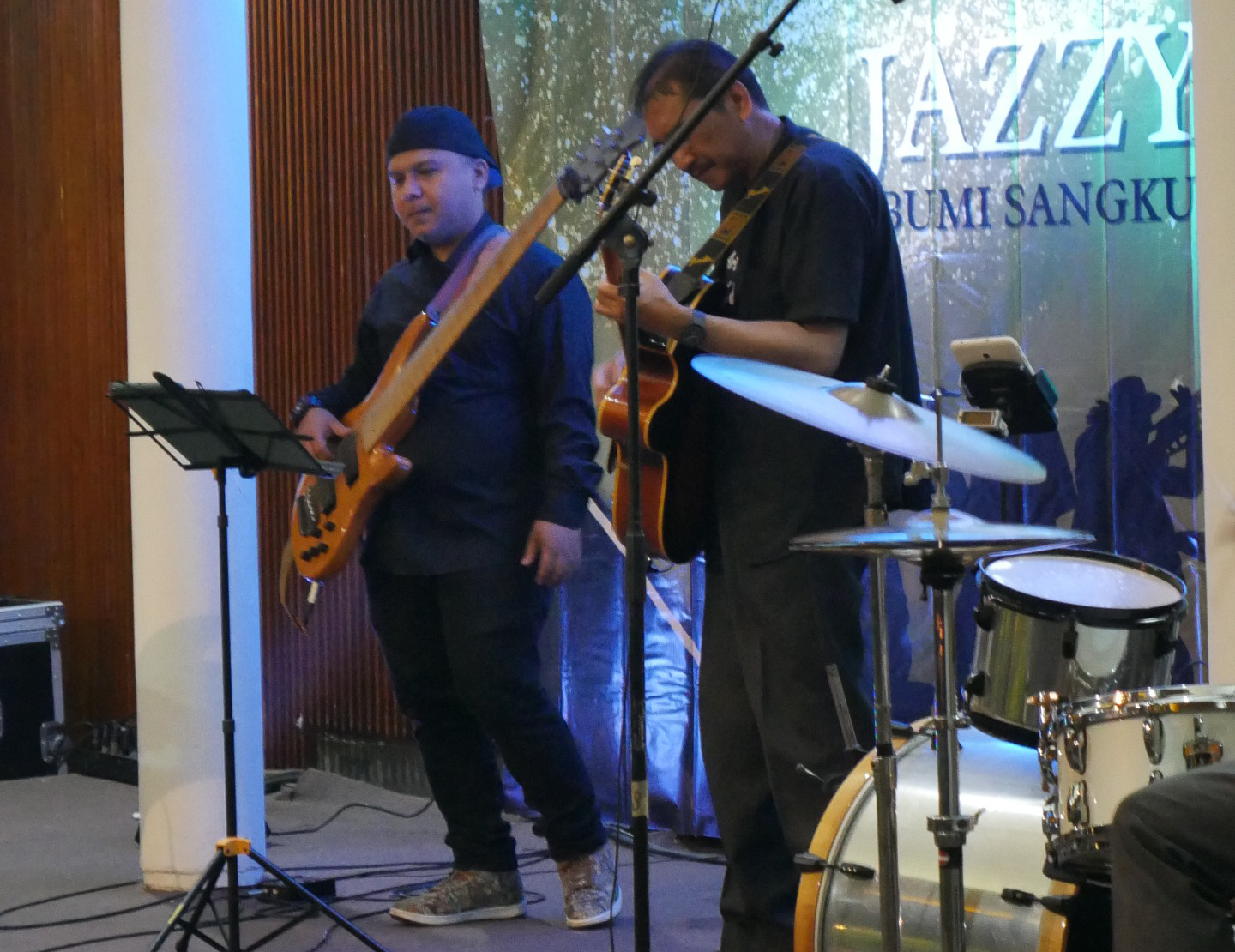
The academic degree of M.Sn. denotes a deep, scholarly immersion into the history, theory, philosophy, and aesthetics of art. For a jazz bassist, possessing this specific academic background transforms the instrument from a mere utilitarian timekeeping device into a primary tool for profound aesthetic expression and historical commentary. Ardiansyah’s approach to constructing a bassline is deeply informed by classical counterpoint, advanced harmonic theory, and the historical lineage of the instrument.
When tasked with navigating a chord progression, Ardiansyah does not simply default to playing the roots of the chords in a perfunctory manner. Instead, he constructs independent, highly melodic, contrapuntal lines that interweave seamlessly with Dr. Rosalin and Ir. Imam Pras on the piano, as well as the horn soloists. His academic understanding of fine arts aesthetics ensures that his note choices are dictated not just by mathematical correctness according to chord-scale theory, but by tonal color, emotional resonance, and narrative arc.
He possesses a highly developed sense of sonic architecture, understanding exactly how the lower frequencies of his instrument interact with the physical acoustic space of historical venues like Bumi Sangkuriang. His basslines are universally characterized by their incredible warmth, their precise intonation, and their relentless forward momentum. He understands the chiaroscuro of music (the use of strong contrasts between light and dark, tension and release) and paints his basslines with the nuanced strokes of a master artist.
Aries Ardiansyah’s musical relationship with drummer Alman Naufal is a critical component of his success and was a defining feature of the Bumi Sangkuriang performance. The two have established a formidable, telepathic rhythm section dynamic over years of collaboration. They have played together in various configurations, providing a highly comfortable, incredibly reliable foundation that is highly sought after by guest soloists and musical directors in Bandung.
This specific synergy is exactly where their respective academic disciplines; fine arts aesthetics (M.Sn.) and institutional linguistics (M.Pd.) intersect most beautifully. While Naufal, the linguist, dictates the percussive syntax and the structural grammar of the groove, Ardiansyah, the artist, provides the semantic meaning and the aesthetic color. A highly syncopated snare drum hit generated by Naufal is, in isolation, an abstract percussive event; however, when Ardiansyah deliberately aligns it with a carefully chosen chromatic passing tone, the percussive event instantly gains immense harmonic significance and aesthetic weight.
Together, they do not just keep time; they create a moving, breathing, reactive foundation. Constructing this type of foundation requires immense, calculated intelligence; executing it flawlessly in a live setting requires even greater physical intuition and mutual trust.
The Dynamics of the Live Ensemble and Open Jam Session
The concert on April 23, 2026, was definitively not an ad-hoc aggregation of individual talents; it was a highly orchestrated masterclass in polymathic synergy. When these five individuals stepped onto the stage at Bumi Sangkuriang, they brought with them the accumulated weight, methodologies, and philosophies of their respective academic disciplines. The resulting performance was characterized by an astonishing level of internal communication, unshakeable structural integrity, and profound emotional depth.
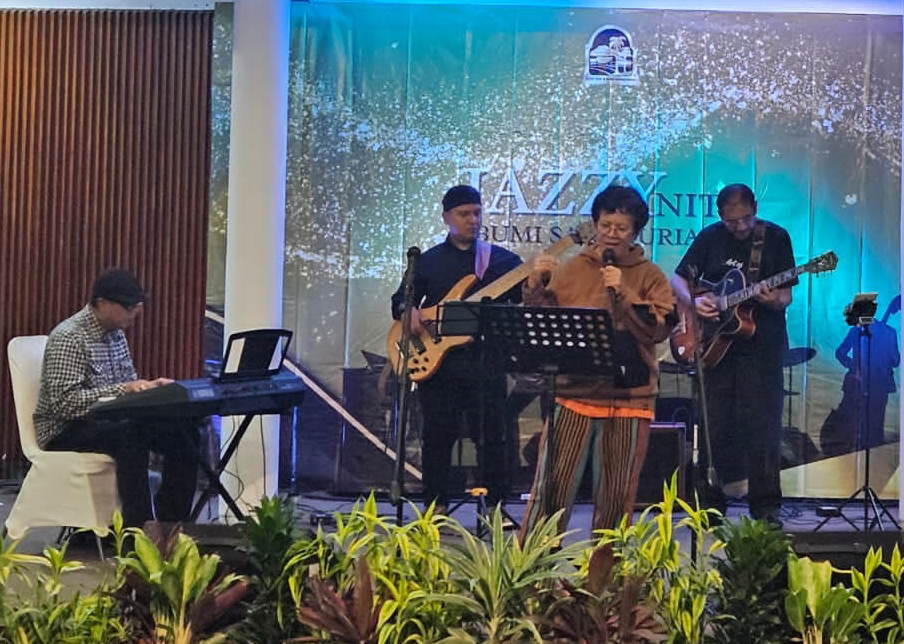
During the live performance, the interplay between these diverse cognitive models resulted in music of unparalleled sophistication. When the ensemble approached standard repertoire (the foundational texts of the jazz vernacular) they completely avoided rote memorization or predictable pathways. Instead, the music was subjected to a continuous, real-time process that closely resembled academic peer review.
If Dr. Rosalin, drawing upon her architectural background, established a highly structured, asymmetric melodic motif, Kanggep Kusuma’s computer science training allowed him to instantly process its underlying algorithm. He would then generate an equally logical, highly efficient contrapuntal response. Beneath this high-level dialogue, Ir. Imam Pras would supply the optimal thermodynamic pressure via his intricate, engineered voicing of the chord changes, ensuring the harmony supported rather than obscured the melodic exchange.
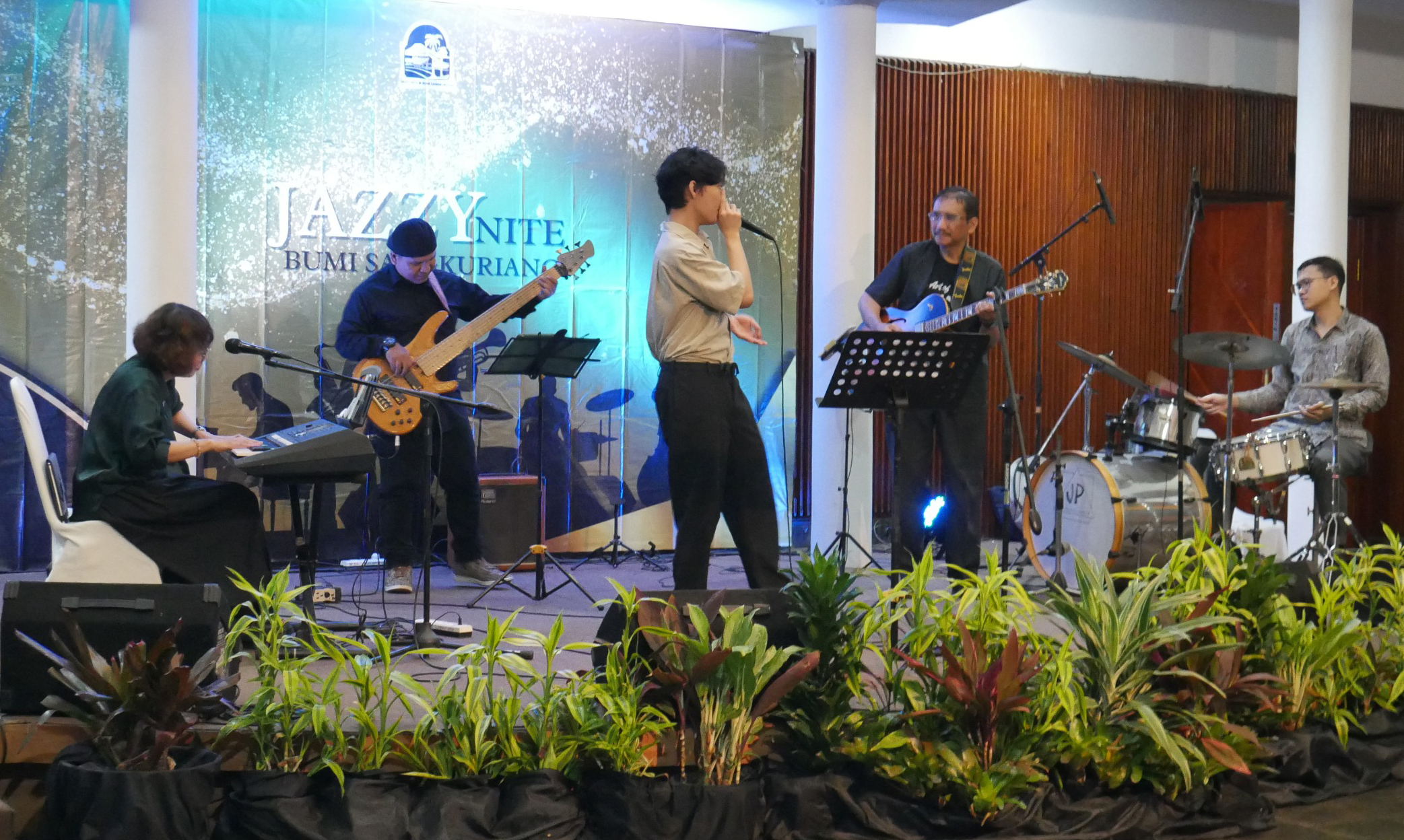
Simultaneously, Alman Naufal’s linguistic translation of the rhythm ensured that the phrasing remained articulate, deeply swinging, and syntactically flawless. Aries Ardiansyah’s deep grounding in fine arts aesthetics ensured the entire towering structure remained firmly rooted in the soulful, visceral, and blues-drenched tradition of the jazz bass lineage.
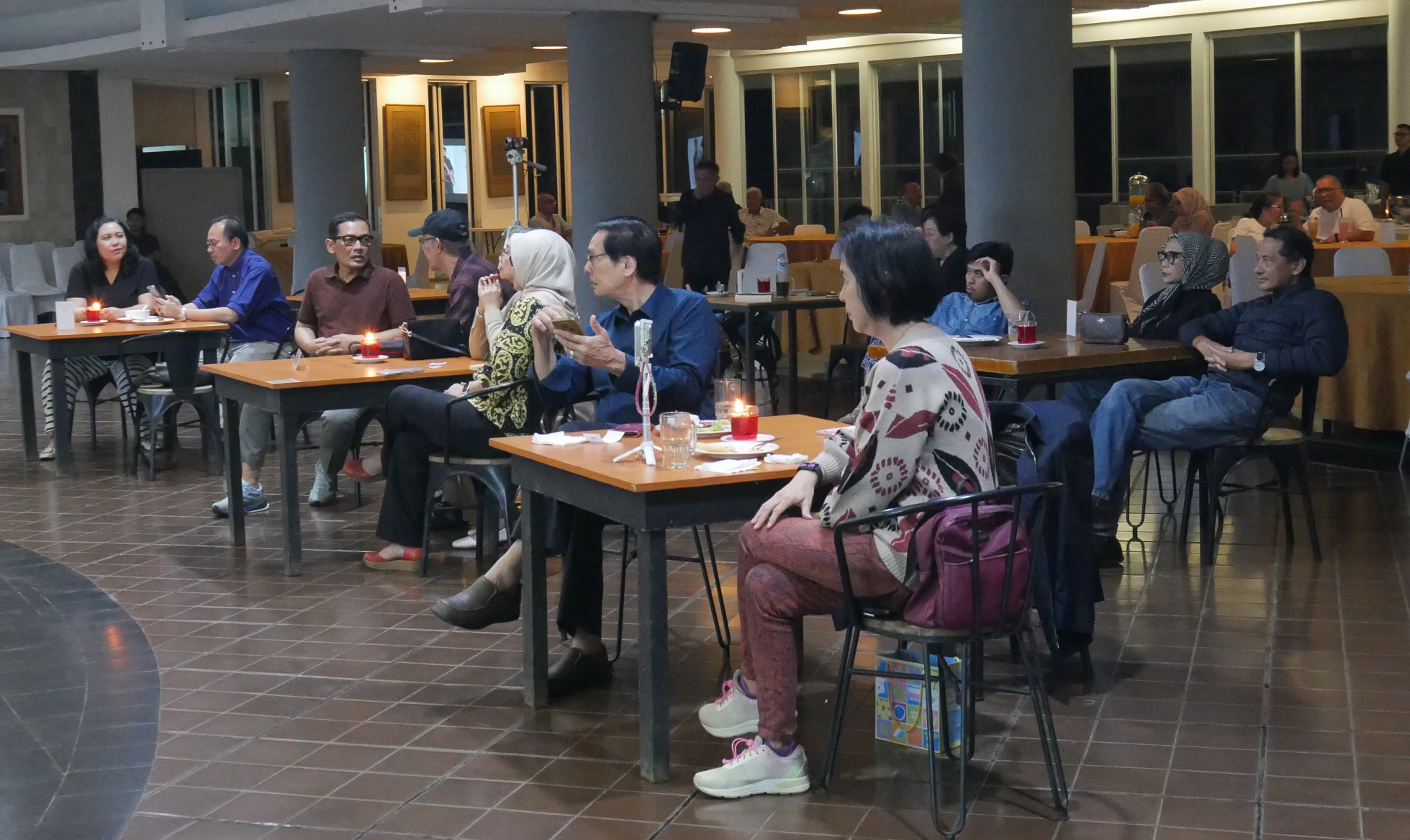
This constant, high-speed intellectual exchange elevated the performance far beyond the realm of mere entertainment; it became a profound aesthetic and intellectual experience. The audience at Bumi Sangkuriang was captivated not merely by the blazing technical virtuosity on display, but by the undeniable, deeply embedded coherence of the music. Even during the most abstract, risk-heavy moments of collective improvisation, the underlying structure (forged by decades of combined academic discipline in disparate fields) prevented the music from collapsing into dissonant chaos. It was a triumph of the intellect as much as it was a triumph of the human spirit.
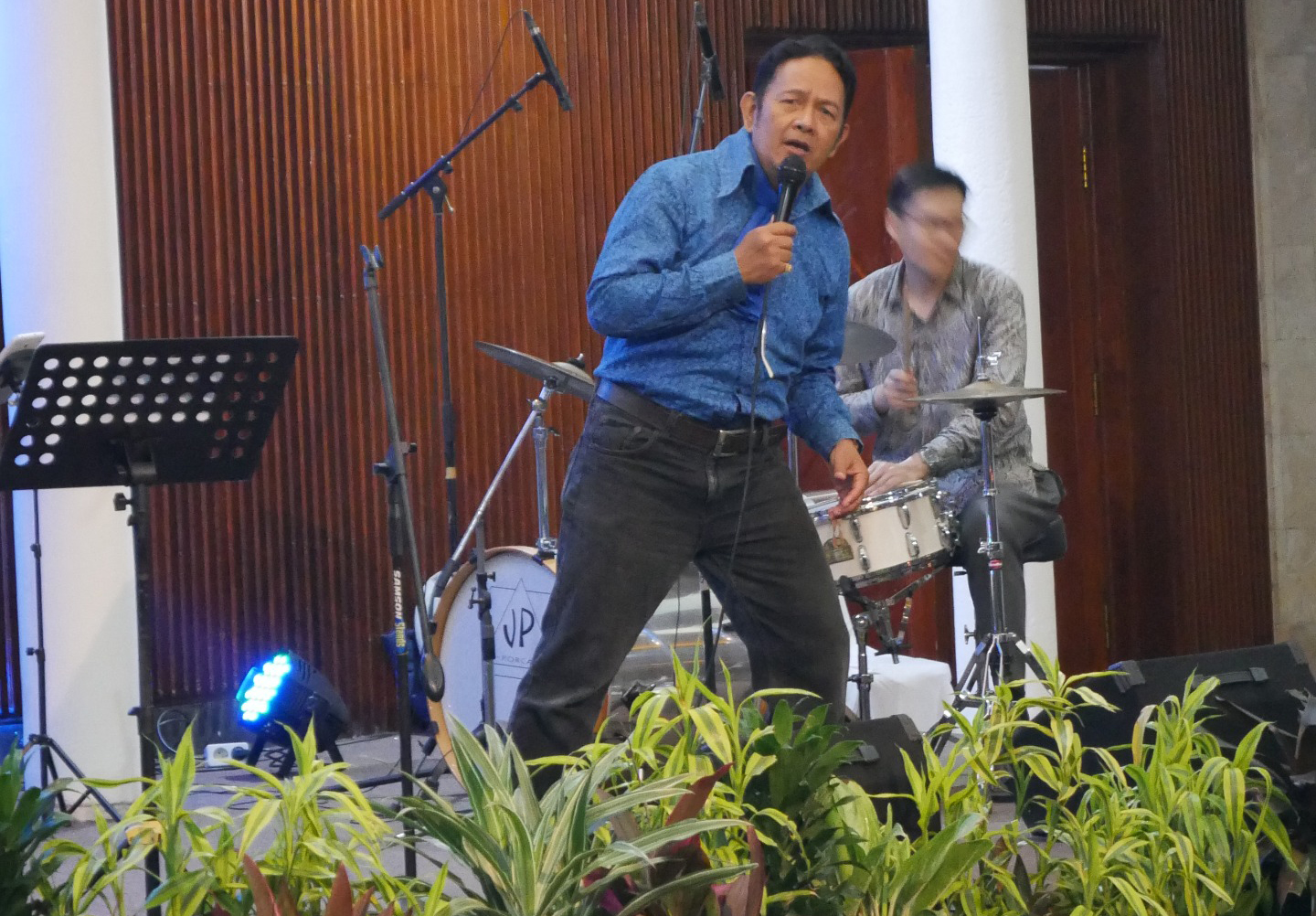
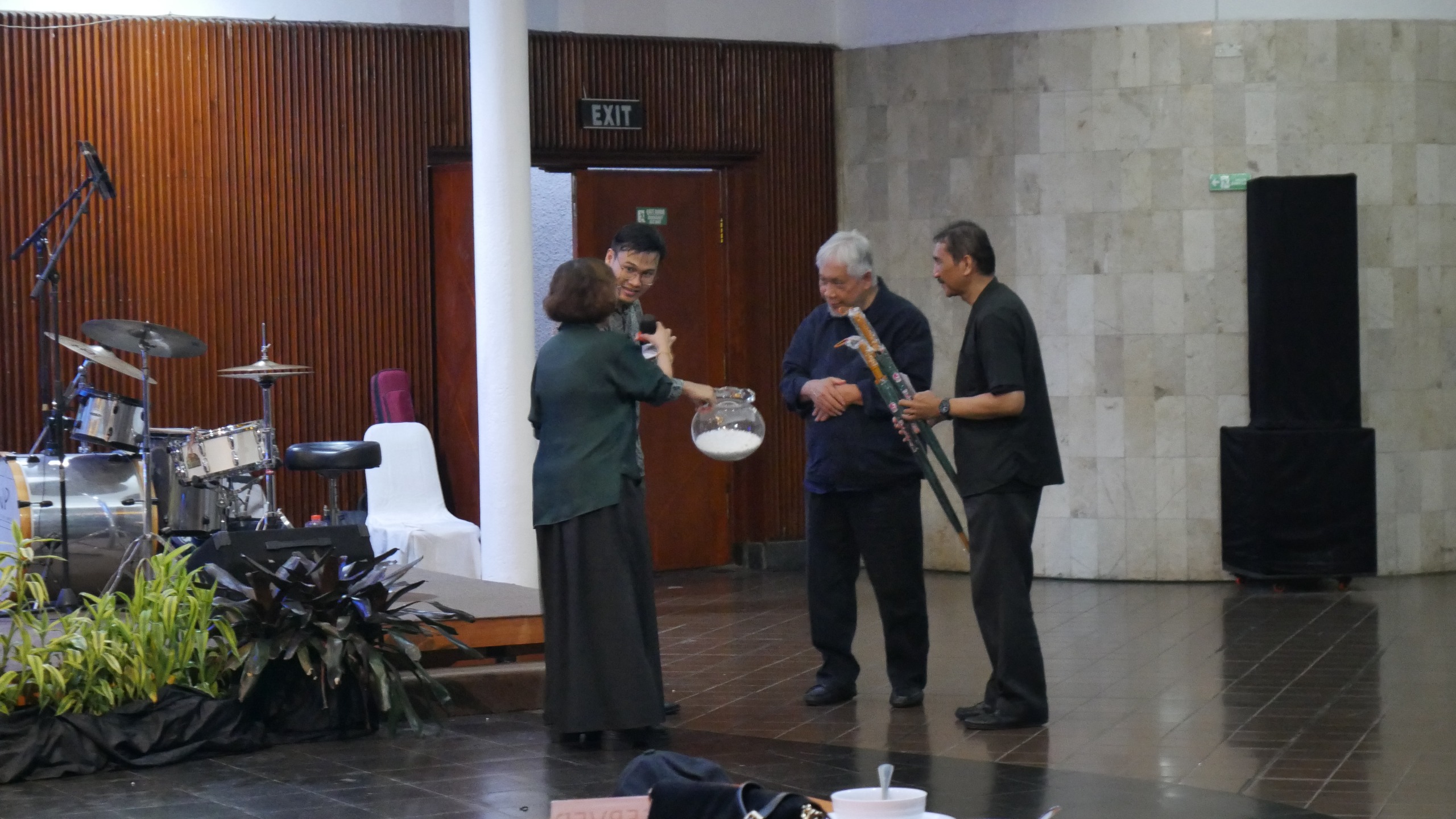
Subsequently, the event also held an open jam-session featuring both talented and highly intelligent individual, such as, Katherina Achmad, M. Si. (Vocal), Adel Sulaiman K., M. Pd. (Guitar), Krishnan Mohamad, S. E. (Guitar), Mikael powerful beat-box (Rosalin’s son), Iwan Presley (Vocal) and Yudi (senior pro-guitarist and instructor). We had also witnessed a breath-taking drum and beatbox battle between Alman Naufal and Mikael in a middle of refreshing brazilian song which is unique and powerful that impressed and mesmerized the audiences. Furthermore, Katherina Achmad, M. Si. presented a popular jazz-tunes, while Yudi and Khrisnan have two blues guitars showcase simultaneously on stage. Not only, having a total blast on stage, Adel Sulaiman K., M. Pd. presented a cool tone improvisation of jazz standards with discipline and inside-tone discipline.
NG Radio’s involvement in covering the jazzy night event
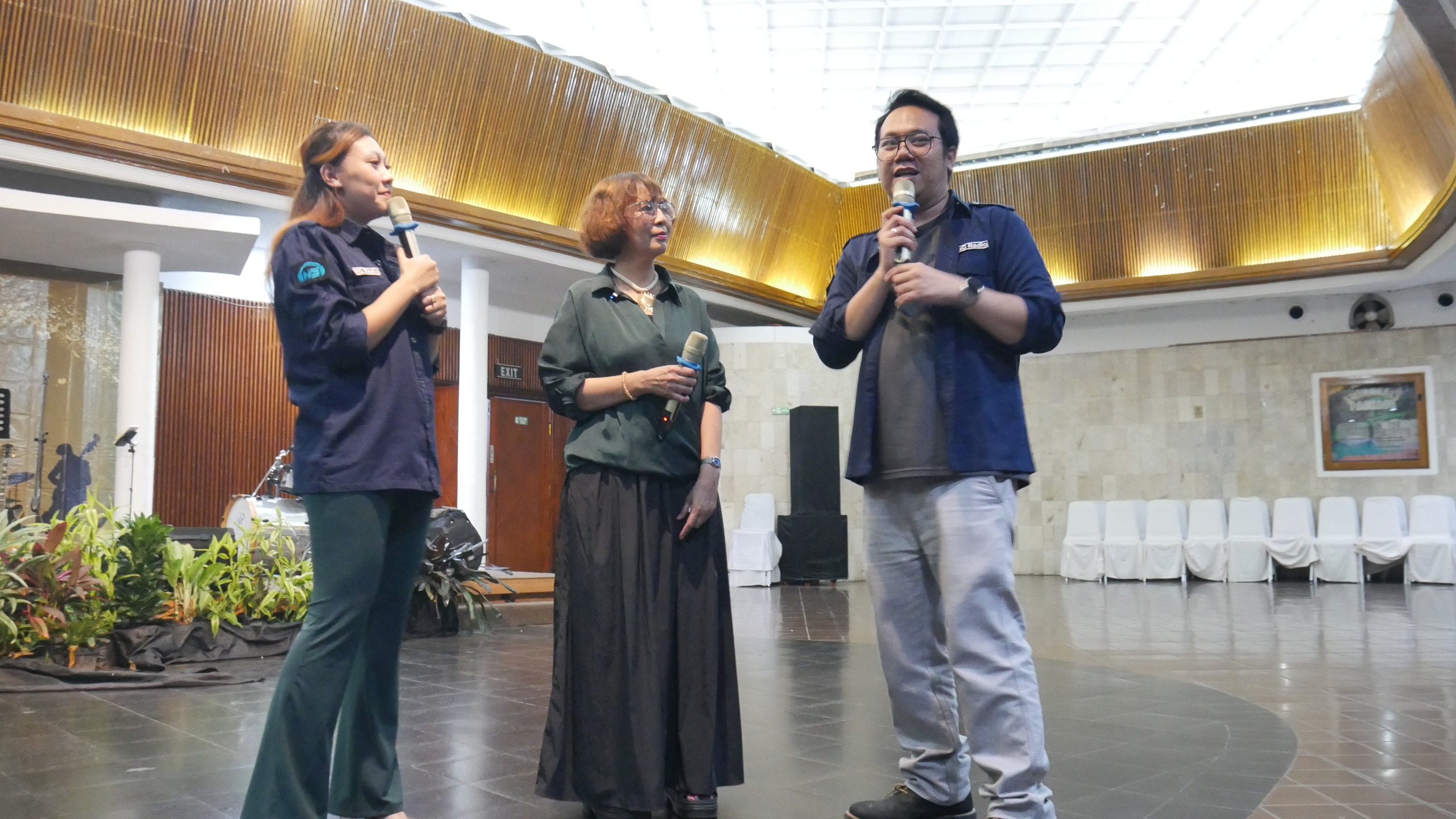
The involvement of NG Radio’s broadcasters, Iiky, Zein, Upe, Ayay, and Qmonk, also enhanced the documentary value of the jazz evening. Live interviews and behind-the-scenes conversations allowed audience that was unable to attend in person to keep connected to the performance. This type of coverage is crucial for jazz events, because improvisation, audience’s response, and spontaneous artistic exchange are key parts of the genre’s appeal.
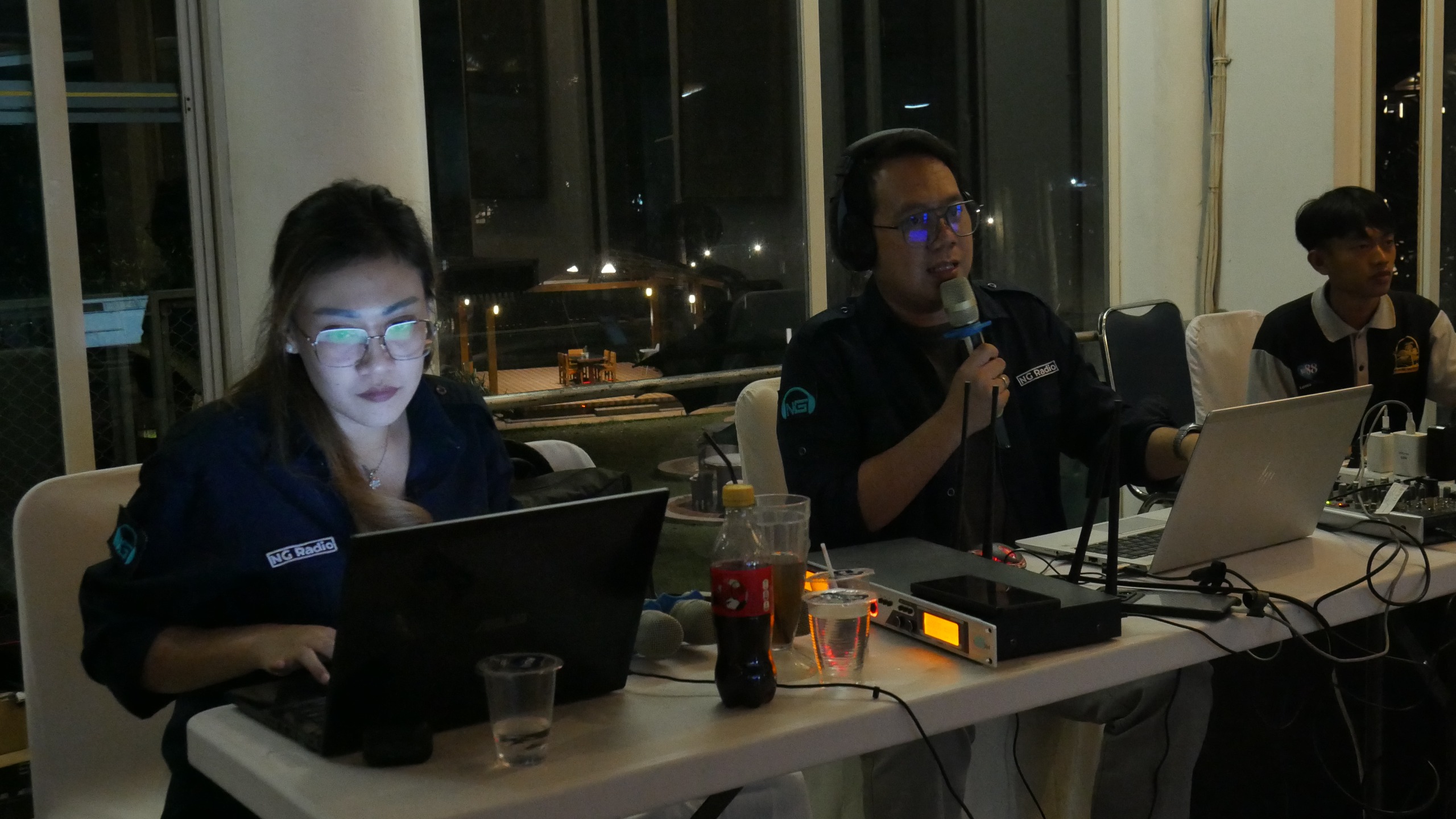
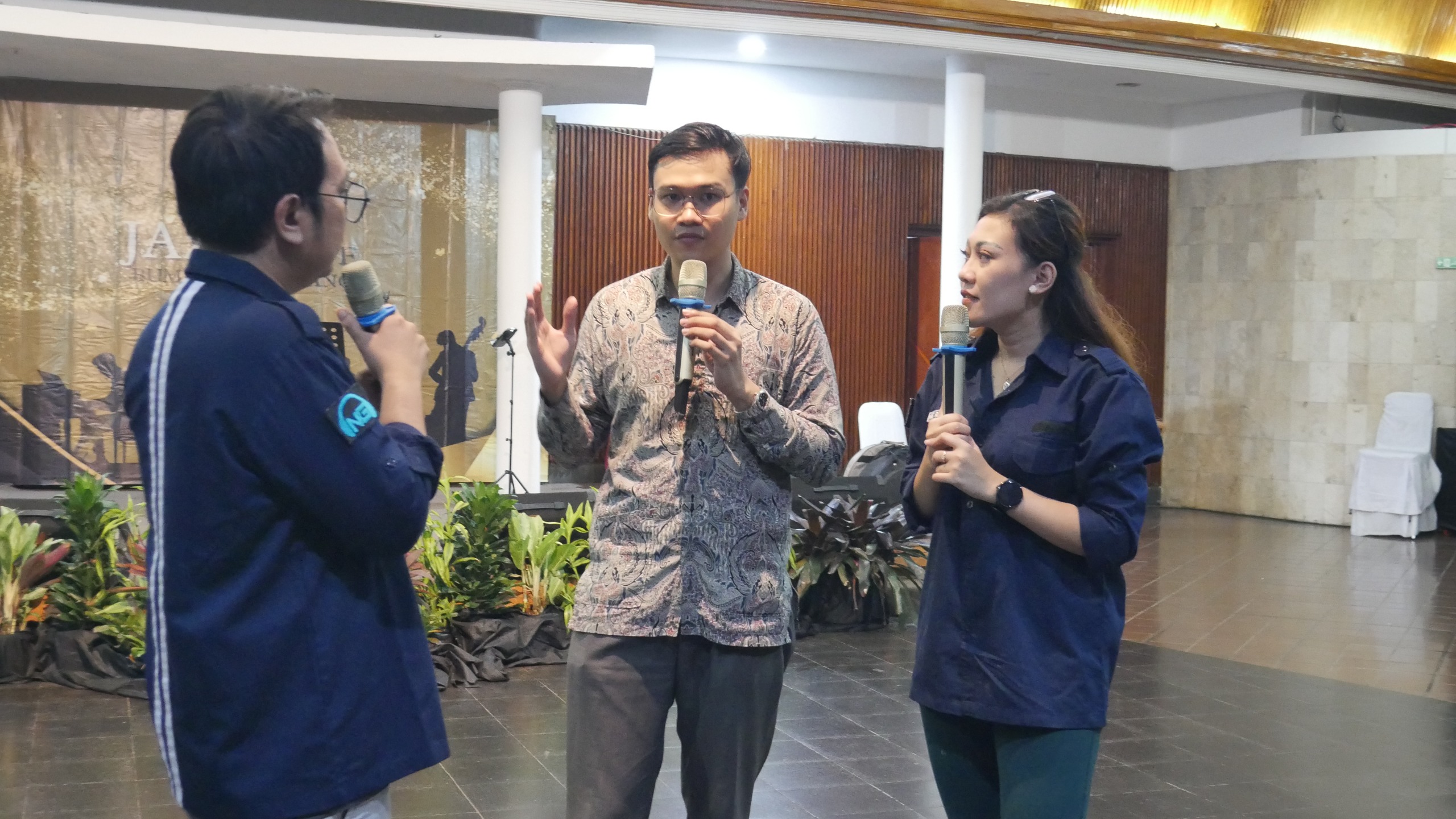
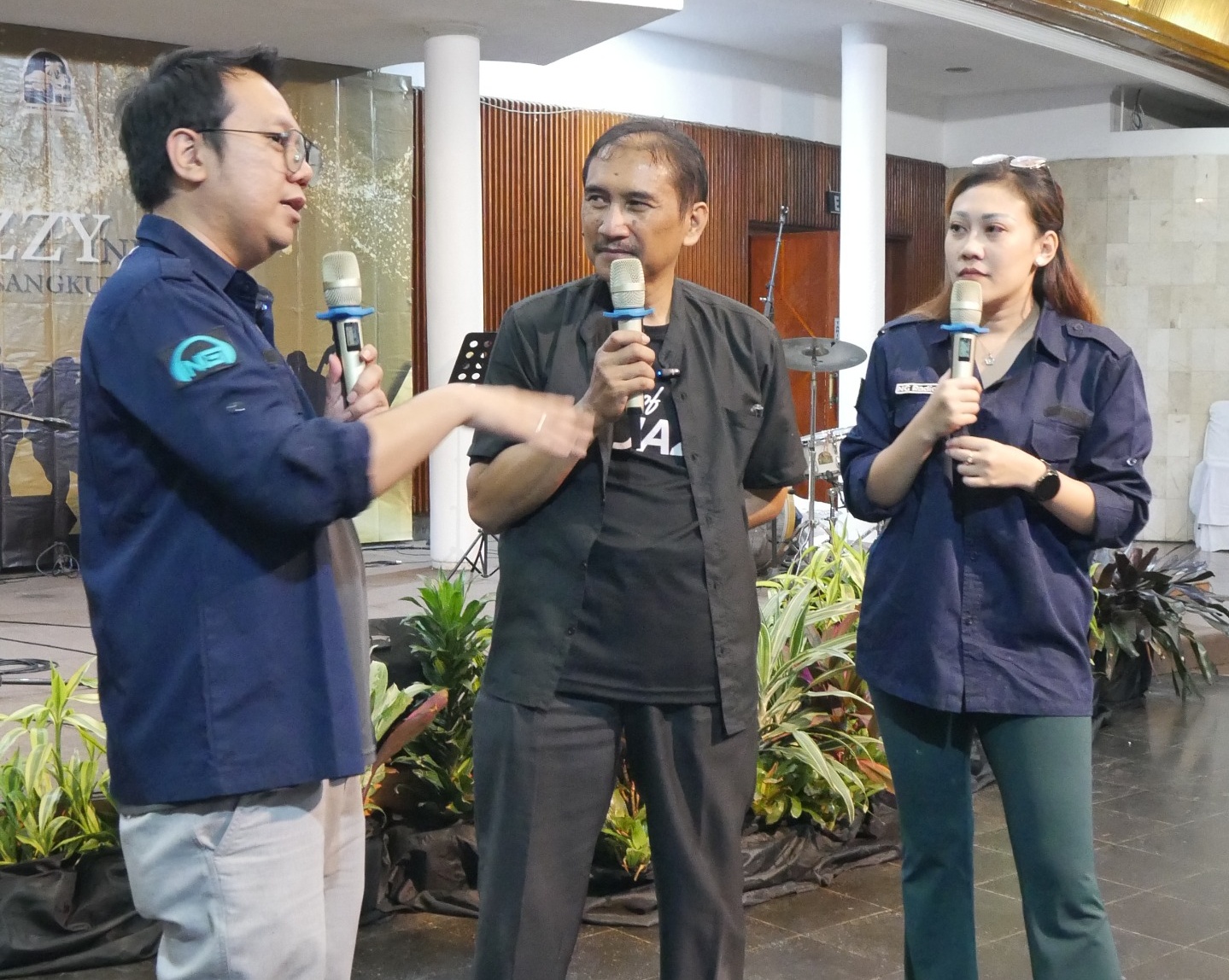
One of the strongest aspect of the coverage was the station’s ability to connect listeners directly with the artists. Live conversations with the artists offered insights into the performers’ creative processes, their stage experiences, and their personal reflections on jazz. This approach reflects the growing role of radio and digital media in modern jazz culture, where broadcasters increasingly function not only as musical platforms but also as cultural mediators between artists and audiences.
The Socio-Cultural Implications for Indonesian Jazz
Finally, the exhaustive review of Dr. Imelda A. Rosalin, Ir. Imam Pras, Alman Naufal, Kanggep A. Kusuma, and Aries Ardiansyah, culminating in their historic April 2026 performance at Bumi Sangkuriang, yields significant, far-reaching insights into the evolving sociology and ethnomusicology of jazz in Indonesia. The primary, incontrovertible takeaway from this study is that advanced, formalized academic training in non-musical fields (specifically architecture, engineering, linguistics, and computer science) provides profound, measurable cognitive advantages in the highly abstract realm of musical improvisation and performance. The epistemological frameworks developed in these disciplines (spatial reasoning, systemic analysis, syntactic decoding, and algorithmic logic) are completely and highly transferable to the complex problems presented by jazz harmony and rhythm.
These individuals fundamentally challenge the romanticized, increasingly antiquated notion of the jazz musician as a purely intuitive, unschooled genius operating solely on raw emotion. Instead, they posit a highly effective new archetype: the academic-improviser. These musicians do not abandon their academic training when they step onto the bandstand; they weaponize it. This polymathic approach results in music that is structurally robust, intellectually stimulating, emotionally nuanced, and infinitely adaptable.
Ultimately, the April 23, 2026 concert at Bumi Sangkuriang stands as a vital, historic marker in the timeline of Indonesian jazz. It provided undeniable, empirical proof that the highest levels of rigid academic rigor and the deepest levels of free artistic expression are not mutually exclusive; rather, they are profoundly complementary.
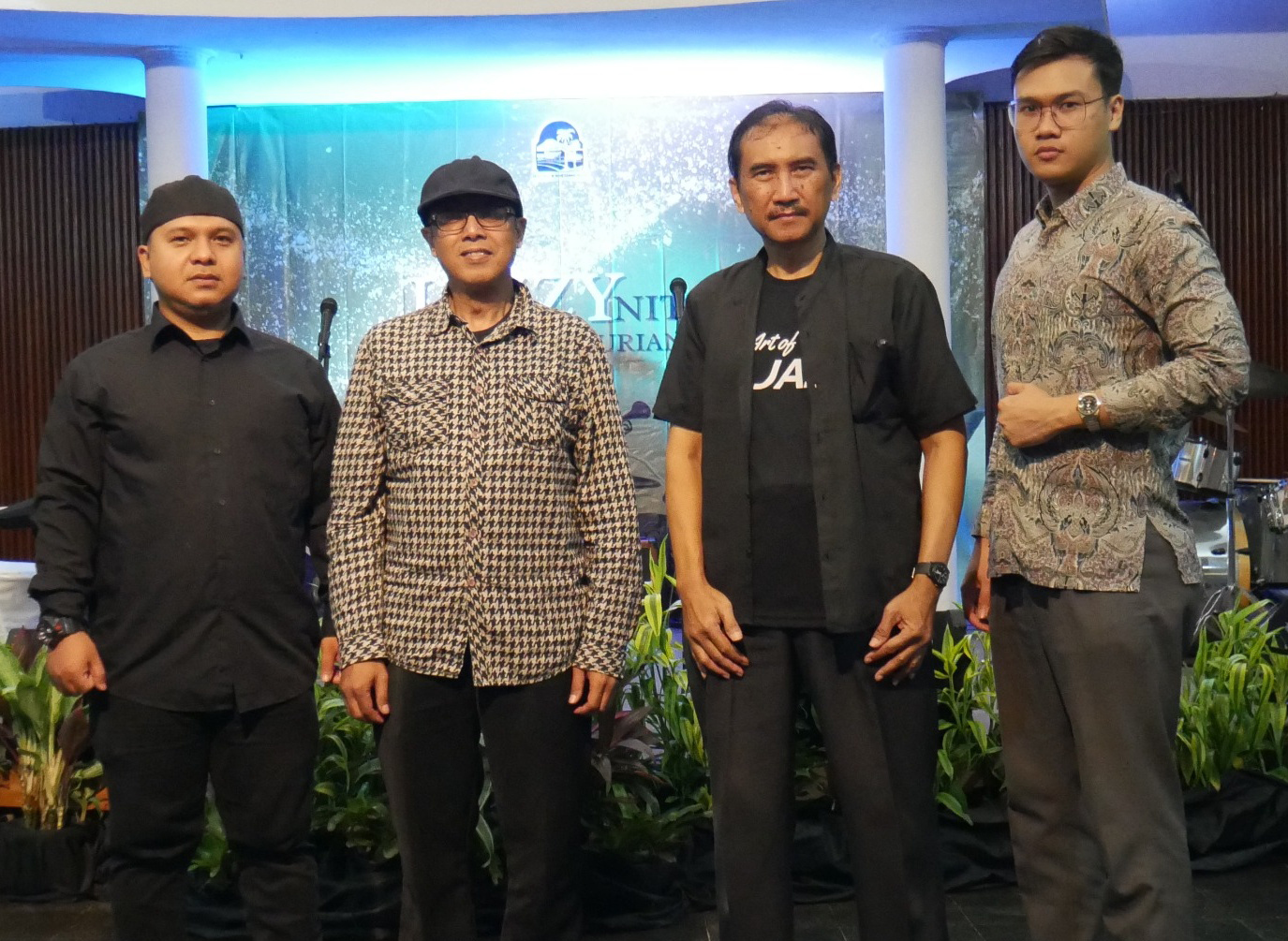
By applying the methodologies of architecture, engineering, linguistics, computer science, and fine arts to the framework of jazz improvisation, Dr. Imelda A. Rosalin, Ir. Imam Pras, Alman Naufal, M. Pd., Kanggep A. Kusuma, S. Pd., M. Kom., and Aries Ardiansyah, M. Sn. have expanded the vocabulary of the music. They have demonstrated that when the analytical mind and the creative soul are properly synchronized, they create a resonance that is truly extraordinary. The performance was a testament to the fact that the disciplines of the university and the traditions of the bandstand are, ultimately, two different methods of playing the exact same instrument: the human intellect.


